


Are you looking for an ecological and effective solution for your pool maintenance? UV pool treatment is an innovative method that uses ultraviolet rays to naturally disinfect water. This advanced technology eliminates bacteria, viruses, and algae, while significantly reducing the use of chemicals such as chlorine. UV lamps, sterilizers, and filtration systems work in synergy to provide you with purer and healthier water, with fewer irritations for the skin and eyes. This modern solution guarantees optimal water quality while respecting the environment.
How does UV pool treatment work?
UV pool treatment relies on the use of ultraviolet rays (UV-C) to destroy microorganisms responsible for water contamination. These high-energy radiations interact with the DNA of bacteria, viruses, and algae, disrupting their genetic structure. Once exposed, these microorganisms are unable to reproduce or cause sanitary nuisances, thus ensuring healthier water.
Another advantage is the ability of UV to reduce chloramines, compounds responsible for chemical odors and irritations (red eyes, dry skin). This function significantly improves water quality, making the swimming experience more pleasant. Furthermore, UV treatment does not transform water into secondary toxins, offering safe and lasting disinfection.
However, pool filtration plays a crucial role in complementing UV radiation. Filtering particles and debris ensures that water circulates uniformly through the system, maximizing exposure to UV rays. For best results, it is recommended to use a high-performance filter associated with this system.
Benefits of UV pool treatment
UV treatment is a naturally ecological solution. Unlike traditional chemical protocols, it generates no residual pollution in the water or the environment, thus preserving natural resources. This responsible disinfection process is ideal for those who value sustainable environmental management.
Another major advantage is the significant reduction in the use of chemicals like chlorine. Fewer chemical treatments mean softer water, less irritating to swimmers' skin and eyes. Eliminating this typical chlorine smell significantly improves user comfort, especially for sensitive or allergic individuals.
Finally, the almost total absence of chemical by-products and irritating effects gives UV-treated pools unparalleled swimming comfort. These reasons make this technology one of the best options for a premium aquatic experience.

Why combine UV treatment with other disinfectants?
Despite its many advantages, UV treatment has a limitation: it does not provide residual disinfection, meaning it leaves no active product in the water after treatment. This means that as soon as the water circulates out of the UV sterilizer, it is once again vulnerable to potential contamination.
To overcome this, it is useful to combine the UV system with other complementary disinfectants, thus ensuring continuous protection throughout the filtration cycle. Among the frequently chosen solutions are:
- Active oxygen, considered an ecological and non-aggressive option.
- Reduced doses of chlorine to maintain a low but effective level of disinfection.
- The salt chlorinator allowing autonomous self-production of mild chlorine.
With this strategic combination, users can enjoy clean, non-aggressive, and constantly protected water, even between filtration cycles.
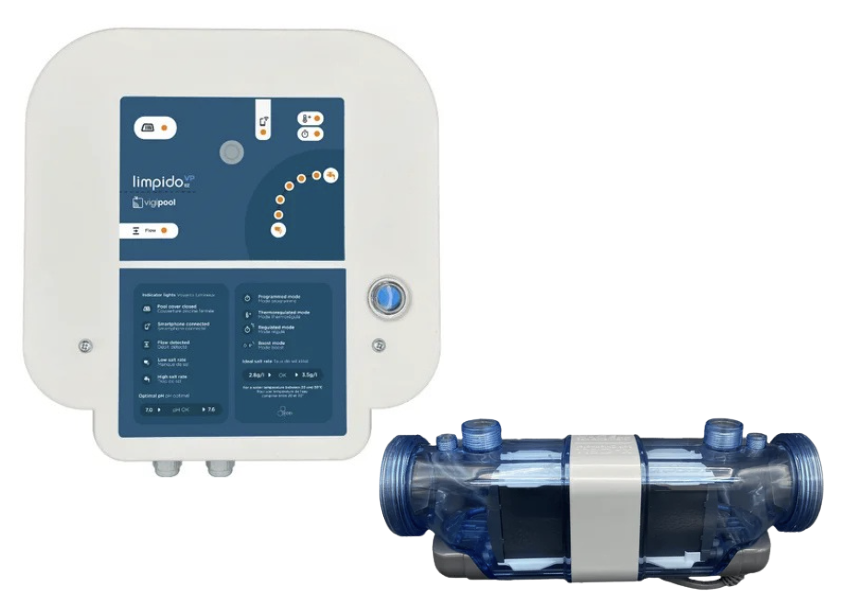
Compatibility and installation of UV systems for pools
UV systems are compatible with most pools, whether they are built of concrete, have a liner coating, or are made of polyester shells. However, their effectiveness can vary depending on the filtration equipment used. For example, inadequate water flow or the use of outdated filters can reduce the performance of UV radiation. Therefore, be sure to check compatibility before any installation.
For installation, two main configurations are possible:
- A standalone UV sterilizer, suitable for standard disinfection needs.
- A sterilizer coupled with a dosing pump, allowing the injection of supplementary products such as chlorine or active oxygen if necessary.
Even if the initial cost may seem high, the use of UV treatment leads to significant long-term savings. You reduce expenses on conventional chemicals and decrease your maintenance costs. This system is also designed to consume little energy, further increasing its financial appeal.
A solution adapted to natural pools and lagoon areas
Natural pools and lagoon areas are delicate installations where it is crucial to preserve the balance of aquatic ecosystems. UV treatment, thanks to its gentle technology, ensures reliable disinfection while protecting plants, beneficial organisms, and even small aquatic animals.
By entirely reducing the use of aggressive chemicals, this method maintains the biological aspect of these basins while effectively eliminating germs that could disrupt this balance. It is thus ideal for those looking to combine natural aesthetics with impeccable hygiene.
Energy savings and best practices for optimized treatment
To optimize the functioning of your UV system, it is recommended to associate it with a variable speed filtration pump. This allows for perfectly adjusted flow, increasing the water's exposure time to UV radiation for more effective disinfection. Furthermore, this technology helps reduce your overall energy consumption.
An insulating pool cover is also recommended. This limits water evaporation and maintains the concentration of additives such as active oxygen or chlorine, reducing their consumption and your additional costs.
FAQ
What is the best treatment for pool water?
UV treatment is considered one of the best. It effectively eliminates microorganisms, reduces chloramines, minimizes the use of chemicals, and thus preserves the environment while improving swimmer comfort.
How does UV disinfection work?
UV disinfection uses UV-C rays to neutralize bacteria, viruses, and algae by damaging their DNA. Water circulates through a UV system after filtration. Microorganisms unable to reproduce are thus eliminated, ensuring healthier water.
What UV power for a pool?
The necessary power depends on the size of the pool and the flow rate of the filtration system. Generally, a standard pool requires a UV lamp of approximately 40 to 120 watts to ensure effective disinfection. Consult a specialist for precise recommendations.
What are the benefits of UV treatment for pools?
UV treatment provides effective disinfection without using chemicals. It limits skin and eye irritations, eliminates unpleasant chlorine odors, and offers an ecological solution. It is also compatible with various filtration systems.
Why combine UV treatment with other disinfectants?
UV treatment does not offer residual disinfection. Combining UV with disinfectants like active oxygen or low doses of chlorine ensures continuous protection against contamination between treatment cycles.
Is the UV system suitable for natural pools?
Yes, UV treatment is ideal for natural pools and lagoon areas. It disinfects without generating aggressive chemicals, preserving the ecological balance while eliminating undesirable germs.
What are the costs and maintenance of a UV treatment for pools?
Initial costs can be high, but use reduces long-term expenses on chemicals and maintenance. Maintenance primarily requires replacing the UV lamp every 12-24 months and cleaning components to ensure optimal effectiveness.



































