


The color of your pool's bottom directly impacts the water temperature. A black-bottom pool heats up on average 2 to 4 degrees faster than a classic blue pool, thanks to better absorption of solar rays. This temperature difference allows for quicker enjoyment of the water in spring and at the beginning of the season. However, black pools also lose more heat at night. The temperature, heating duration, and thermal retention also depend on other factors such as sun exposure, water depth, and the use of a cover.
The central question: does a black-bottom pool heat up faster than a blue-bottom pool?
Yes, a black-bottom pool generally heats up faster than a blue-bottom pool. Under direct sunlight conditions, a pool with a black liner can gain an additional 2 to 4 degrees in a single summer day compared to a blue liner. This is explained by a simple principle of physics: dark surfaces absorb more of the sun's rays than light surfaces. However, this difference comes with a major drawback: nighttime heat loss is also greater with a black bottom. This phenomenon tends to equalize temperatures over several days, making the thermal advantage less significant in the long term.

Does the color of the pool bottom really influence the water temperature?
How does the bottom color, whether black or blue, affect solar heat capture?
Solar heat capture directly depends on the color of your pool's bottom. A black surface absorbs nearly 90% of the UV-visible light that strikes it, while a blue surface absorbs only 15 to 30%. This significant difference is explained by the light absorption properties of different colors. Black, which absorbs almost all light rays, converts this energy into heat. Blue, on the other hand, reflects a large part of the light, which limits its ability to capture solar energy.
In a black-bottom pool, this superior absorption allows the water to heat up faster during daylight hours. This is particularly noticeable in spring or early season, when every degree gained matters to make swimming pleasant. The water thus becomes usable more quickly after winter, which can extend your swimming season. For pool water heating, the most efficient method remains the heat pump.

What are the differences in absorption and radiation between a black-bottom pool and a blue-bottom pool?
The absorption of solar energy is only part of the thermal equation. A black-bottom pool can capture up to 30% more solar energy than a light-colored pool under ideal conditions. However, thermal radiation also plays a crucial role. Dark surfaces emit infrared radiation more efficiently, meaning they lose heat more quickly when the heat source (the sun) disappears.
This phenomenon creates a daily cycle: a black pool heats up faster during the day but also loses more heat at night. Conversely, a blue pool heats up more slowly but retains its temperature better during the night. Over a period of several days, this difference can significantly diminish, with daytime gains being partially offset by nighttime losses.
| Criterion | Black bottom | Blue bottom |
|---|---|---|
| Light absorption | Approximately 90% | 15-30% |
| Daytime heat gain | Rapid (2-4°C/day) | Moderate |
| Nighttime heat loss | Significant | Moderate |
| Stable temperature over several days | More marked variations | More stable |
Other factors influencing the heating of black-bottom and blue-bottom pools
The impact of the environment, depth, and solar exposure
Liner color is only one factor among others that influence water temperature. The environment plays a decisive role: a black-bottom pool placed in the shade of trees will not fully benefit from its thermal absorption capacity. Conversely, a blue pool in full sun all day can reach very comfortable temperatures despite its lower absorption.
Pool depth is also crucial. The deeper a pool, the less the bottom color influences the overall water temperature. In a 2-meter deep pool, the difference between a black and blue liner becomes almost negligible, as the water volume dilutes the warming effect. Shallow pools, such as wading pools or step areas, show the most significant temperature differences depending on the lining color.
Resistance to fading and maintenance of different colored liners
Beyond thermal performance, liner durability is an important aspect to consider. Black or dark liners are generally more susceptible to fading caused by UV and chemicals. After a few years, a black bottom can lose its intensity and become grayish, thus reducing its thermal absorption properties.
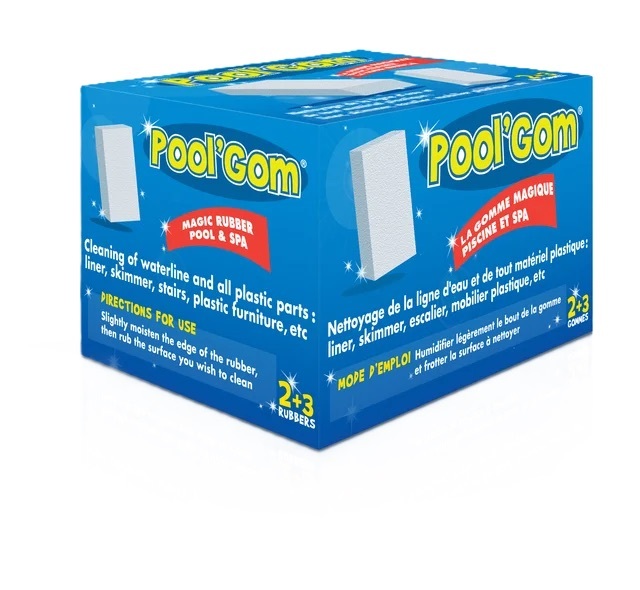
Maintenance also differs depending on the color. Dark liners make limescale deposits and impurities more visible, requiring more frequent cleaning. Algae and other microorganisms can also be harder to spot on a black bottom, sometimes complicating maintenance. Conversely, blue bottoms camouflage certain impurities better but can hide potential problems such as stains or the beginning of algae formation. For cleaning the liner and its waterline, it is recommended to use a magic sponge.
The thermal performance of a black-bottom pool: myth or reality?
Analysis of experiments and physical models on heat capture
Numerous experiments have been conducted to evaluate the real impact of liner color on water temperature. The results confirm that the black-bottom pool indeed heats up faster under direct sunlight. This difference is particularly noticeable early in the day, where the temperature difference can reach up to 4°C between a black pool and a blue pool of the same size.
However, physical models also show that this thermal advantage diminishes over time. Over a period of one week with stable weather conditions, the average temperature difference between the two types of pools tends to decrease, stabilizing around only 1 to 2°C. This phenomenon is explained by the equilibrium established between daytime gains and nighttime losses, especially if the pool is not equipped with a thermal cover.
What do professionals and studies say on the subject?
Professionals in the sector generally recognize the thermal effect of dark liners, but they qualify its importance. According to several studies conducted by pool equipment manufacturers, the color of the bottom is one factor among others in the thermal equation of a pool. Geographical location, orientation, the presence of a cover, and the filtration system influence the final water temperature just as much, if not more.

Tips for optimizing your pool's heating based on its bottom color
Choosing the right liner to maximize solar heat
If your priority is to gain a few extra degrees without a heating system, a dark liner can be a wise choice. Black is not the only option: shades like anthracite gray, navy blue, or even dark green also offer good thermal absorption. For a compromise between aesthetics and performance, consider gradient liners that combine dark and lighter areas.
Also consider the texture of the liner. A matte liner generally absorbs heat better than a glossy liner, which reflects more light. If you opt for a black-bottom pool, make sure the material is of superior quality with good UV resistance to prevent premature fading that would reduce its thermal properties over time.
Additional tips: insulation, lighting, and water management
Regardless of your liner color, several strategies can optimize your pool's temperature:
- Use a thermal cover (bubble cover) to limit heat loss at night
- Install solar panels to preheat the water before it enters the pool
- Opt for an energy-efficient heat pump for less sunny days
The insulation of the pool walls also plays a crucial role in heat retention. A well-insulated pool, even with a classic blue bottom, will maintain its temperature better than an uninsulated black-bottom pool. If you are renovating your pool, consider improving insulation before changing the liner color.
Finally, LED lighting can change the visual perception of your pool. Warm-toned LEDs can give the impression of warmer water in the evening, regardless of the actual bottom color. This psychological trick effectively complements the physical benefits of a dark liner.

Conclusion: what is the real impact of liner color on your pool's temperature?
At the end of this analysis, we can confirm that a black-bottom pool indeed heats up faster than a blue-bottom pool, especially under direct sunlight. However, this difference is often less spectacular than some commercial arguments suggest. The real temperature difference is generally between 1 and 4°C depending on conditions, with a practical average around 2°C over time.
The liner color remains one factor among others in the thermal equation of a pool. Sun exposure, the use of a cover, pool depth, and its insulation often have a more decisive impact. To make the best choice, consider your geographical location, your pool's placement, and your usage habits rather than relying solely on the bottom color.
If your priority is a rapid temperature rise at the beginning of the season, a dark bottom can be advantageous. If you prefer a more stable temperature with fewer variations between day and night, a traditional blue bottom might better meet your expectations. In any case, combine your color choice with other solutions like a good thermal cover to maximize swimming comfort throughout the season.
FAQ
What is the best color for a pool liner?
The best color for a pool liner depends on the desired effect. Blue liners are popular for their relaxing appearance and their ability to give a sense of depth to the water. Some opt for lighter or darker shades depending on their outdoor decor.
How can I make my pool heat up faster?
To make your pool heat up faster, you can use a solar cover to retain heat and reduce evaporation. Installing a heat exchanger or a pool heater can also increase water temperature more effectively, especially in direct sunlight.
Which pool color is the warmest?
The warmest pool color is generally black or very dark shades. These colors absorb more heat from the sun, allowing the water to stay warmer, especially in sunny climates.
What are the advantages of a black-bottom pool?
A black-bottom pool offers advantages such as an elegant and modern aesthetic, a mirror effect that enhances the space, and the ability to maintain a higher water temperature due to heat absorption. It can also reduce glare.



































