


Choosing the right cleaning robot for a pool with steps or stairs is crucial for maintaining the cleanliness and hygiene of your pool. These specific areas present unique cleaning challenges, requiring efficient and versatile equipment. We will examine the essential criteria for selecting the ideal robot, capable of effectively cleaning not only the bottom and walls, but also the stairs of your pool.
Choosing a cleaning robot for a pool with stairs requires particular attention to technical and functional characteristics:
- High suction power and brushes adapted to adhere to vertical surfaces
- Track drive system for better grip on steps
- Advanced adhesion technologies such as suction systems or multi-directional brushes
- Compatibility with your pool's lining type
- Special features for stair cleaning, such as dedicated programs or obstacle sensors
- Pairing a manual vacuum with your cleaning robot for greater efficiency
Essential features of a robot for pool stairs
An effective cleaning robot for pools with steps must possess several key attributes. First, high suction power is essential for adhering to the vertical and inclined surfaces of the stairs. Brushes adapted to the lining also play a crucial role, ensuring good adhesion and deep cleaning. The robot's dimensions must allow it to position itself entirely on the steps, while powerful motors are necessary to climb the stairs without difficulty. These combined characteristics guarantee optimal cleaning of all areas of your pool, including the most difficult-to-reach spots. For even more precise cleaning of steps, corners, and a shallow end, you can supplement the cleaning with a manual vacuum, ideal for reaching the most delicate areas.

Traction types: wheels vs. tracks
The robot's movement system is a determining factor for its effectiveness on stairs. Tracked models are generally more efficient than those equipped with wheels. Tracks offer better grip and a larger contact surface with the steps, effectively facilitating ascent and descent of stairs. They also adapt better to different types of linings, whether tile, liner, or concrete. Nevertheless, wheeled robots may be more suitable for certain pool configurations, particularly those with pronounced right angles or specific obstacles.
Wall and stair adhesion technologies
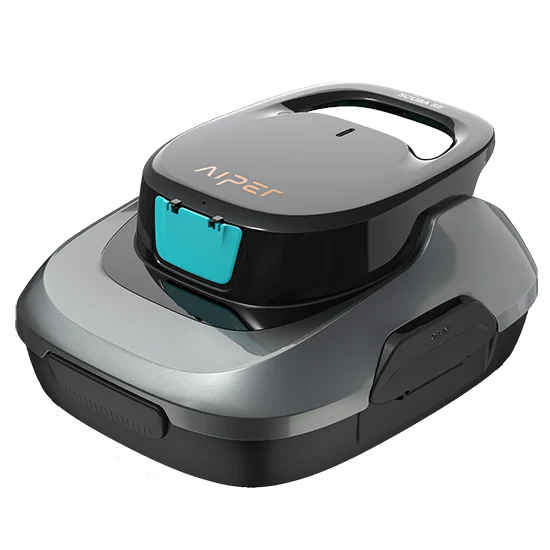
Robot cleaner manufacturers have developed various technologies to improve adhesion to walls and stairs. Some models use advanced suction systems that create a suction cup effect, allowing the robot to effectively climb vertical surfaces. Others incorporate multi-directional rotating brushes that increase friction and facilitate movement on the steps. The latest technologies often combine these approaches with intelligent sensors, capable of detecting changes in incline and adjusting suction power accordingly.
Compatibility with different lining types
The choice of robot must take into account the type of lining of your pool. A model suitable for tiles may not be optimal for a liner or concrete surface. Pools with a diamond or polyester lining require specific brushes to avoid scratches while ensuring effective cleaning. It is crucial to check the robot's compatibility with your type of lining, especially for stair areas that are often subjected to more intense friction. A well-adapted robot will preserve the integrity of your pool while effectively removing dirt and algae.
Special features for stair cleaning
Some high-end robots offer functions dedicated to stair cleaning. These features include:
- Specific cleaning programs for stair areas
- Obstacle detection sensors to navigate around steps
- Side brushes to clean corners and edges of steps
- A remote control to manually guide the robot in difficult areas
These advanced functions allow for more precise and effective stair cleaning, ensuring that every corner of your pool is spotless.

Robot maintenance and upkeep
Regular maintenance of your cleaning robot is essential to maintain its performance, especially on stair areas which require more effort. Frequent cleaning of brushes and filters prevents the accumulation of debris that could reduce the robot's efficiency. It is recommended to check and clean the robot after each use, paying particular attention to the elements in direct contact with the steps. Careful maintenance will not only extend the lifespan of your device but also guarantee consistent cleaning quality, thereby preserving the cleanliness and hygiene of your pool season after season.



































