


Regular cleaning of your pool liner is essential to maintain clean water and extend the life of your pool. Proper maintenance not only preserves the aesthetic appeal of your pool but also prevents the accumulation of dirt and the growth of algae. Discover four simple and effective tips for easily cleaning your pool liner.
Discover four simple and effective tips for easily cleaning your pool liner and maintaining clean water.
- Weekly brushing with a soft-bristle brush to remove impurities
- Use of specific products for deep cleaning
- Preventive maintenance: chemical balance of the water and regular cleaning of the waterline
- Natural solutions like white vinegar or baking soda for eco-friendly cleaning
Tip 1: Regular brushing, the key to a pristine liner
Brushing is a fundamental step in maintaining your pool liner. This method helps to remove deposits and impurities that accumulate on the walls and bottom of the pool. For optimal cleaning, it is recommended to brush your liner at least once a week during the swimming season.
Here are the steps to follow for effective brushing:
- Choose a brush suitable for your liner type
- Start by brushing the walls from top to bottom
- Then clean the bottom of the pool using circular motions
- Pay special attention to hard-to-reach areas, such as corners and stairs
For optimal results, use a soft-bristle brush specially designed for pool liners. Avoid brushes that are too stiff, as they could damage the delicate surface of the liner. Do not hesitate to invest in a telescopic pole to easily reach all areas of your pool.
Tip 2: The use of specific products for deep cleaning
While brushing is effective for removing most dirt, some stubborn stains require the use of specific products. There is a variety of cleaners on the market designed for pool liners, adapted to different types of dirt.
Here is a summary table of the main types of products and their use:
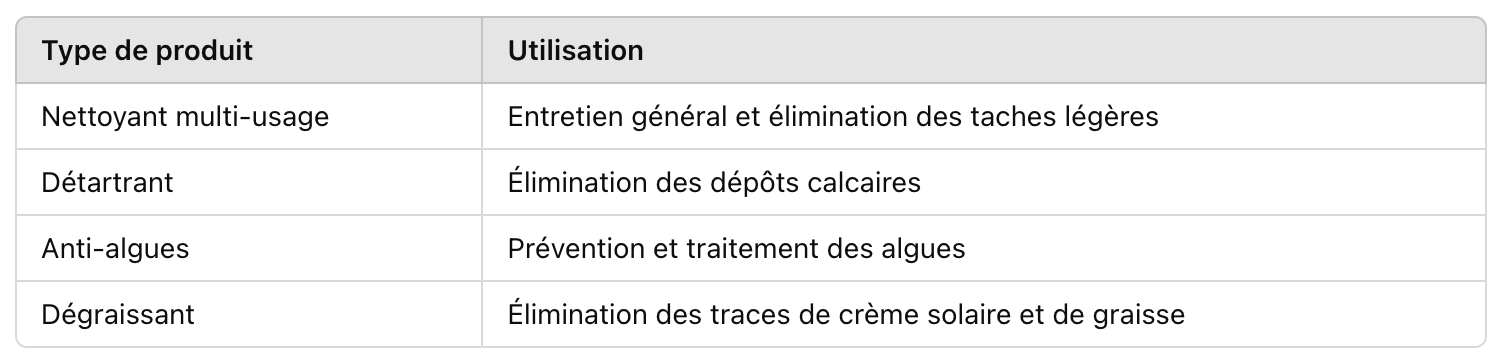
When using these products, it is vital to carefully follow the manufacturer's instructions. Incorrect application could damage your liner or disrupt the chemical balance of the water. Remember to rinse thoroughly after application to remove any product residue.
Tip 3: Preventive maintenance to avoid stubborn stains
Prevention is often the best cure. By adopting a few good practices, you can significantly reduce the frequency and intensity of cleaning required for your pool liner. Here are some tips for effective preventive maintenance:
- Maintain an optimal chemical balance of your pool water
- Regularly clean your filtration system's filter
- Quickly remove leaves and other floating debris
- Encourage swimmers to shower before entering the pool
- Install a pool cover when not in use
Regular maintenance of the waterline is particularly important. This area, located at the junction between air and water, is prone to the accumulation of greasy deposits and dirt. Use a sponge or a soft cloth soaked in a suitable cleaner to gently scrub this area at least once a week.
The chemical balance of the water plays a crucial role in preventing stains and extending the life of your liner. Regularly check the pH, chlorine level, and alkalinity of the water using testers. An ideal pH is between 7.2 and 7.6, while the chlorine level should be maintained between 1 and 3 ppm (parts per million).
Tip 4: Natural solutions for eco-friendly cleaning
For those who prefer more eco-friendly methods, there are several effective natural solutions for cleaning a pool liner. These alternatives are not only environmentally friendly but also gentle on your liner and swimmers' skin.
Here are some natural options to consider:
- White vinegar: Diluted in water, it is effective against limescale deposits and light stains
- Baking soda: Mixed with water to form a paste, it can remove stubborn stains
- Lemon: Its natural acidity helps dissolve deposits and disinfect
- Hydrogen peroxide: Diluted, it can help eliminate algae and lighten stains
To use these natural solutions, apply them directly to the areas to be cleaned using a soft sponge or cloth. Leave them on for a few minutes, then gently scrub before rinsing thoroughly. It is important to test these products on a small, inconspicuous area before using them on the entire liner to ensure they do not cause discoloration.
Remember that even natural solutions should be used with caution. Too high a concentration or too frequent application could affect the chemical balance of your pool water or damage the liner in the long run. The goal is to find a balance between cleaning effectiveness and preservation of your equipment.
By adopting these four simple and effective tips, you will be able to keep your pool liner clean and in good condition throughout the season. Regular and appropriate maintenance will allow you to fully enjoy your pool while extending the life of your liner. Remember that the key to successful cleaning lies in regularity and gentleness in caring for your pool.



































