


If you want to keep your pool at a pleasant temperature while controlling your energy expenses, installing a pool heat pump is an ideal solution. This innovative system uses natural energy from the air to efficiently heat your pool water. By capturing calories from the outside air and converting them into heat, this equipment significantly reduces your electricity consumption while ensuring an optimal water temperature. Easy to use and environmentally friendly, it provides consistent and economical heating for your pool.
Understanding how a pool heat pump works
A pool heat pump is a clever device that harnesses the thermal energy from the environment to efficiently heat your pool water. By using air as its primary energy source, this system relies on an ingenious thermal cycle that transfers heat captured from the air to the pool water. This is a particularly efficient and ecological solution for maintaining a pleasant temperature in your pool. Let's explore its components and mechanisms in more detail.
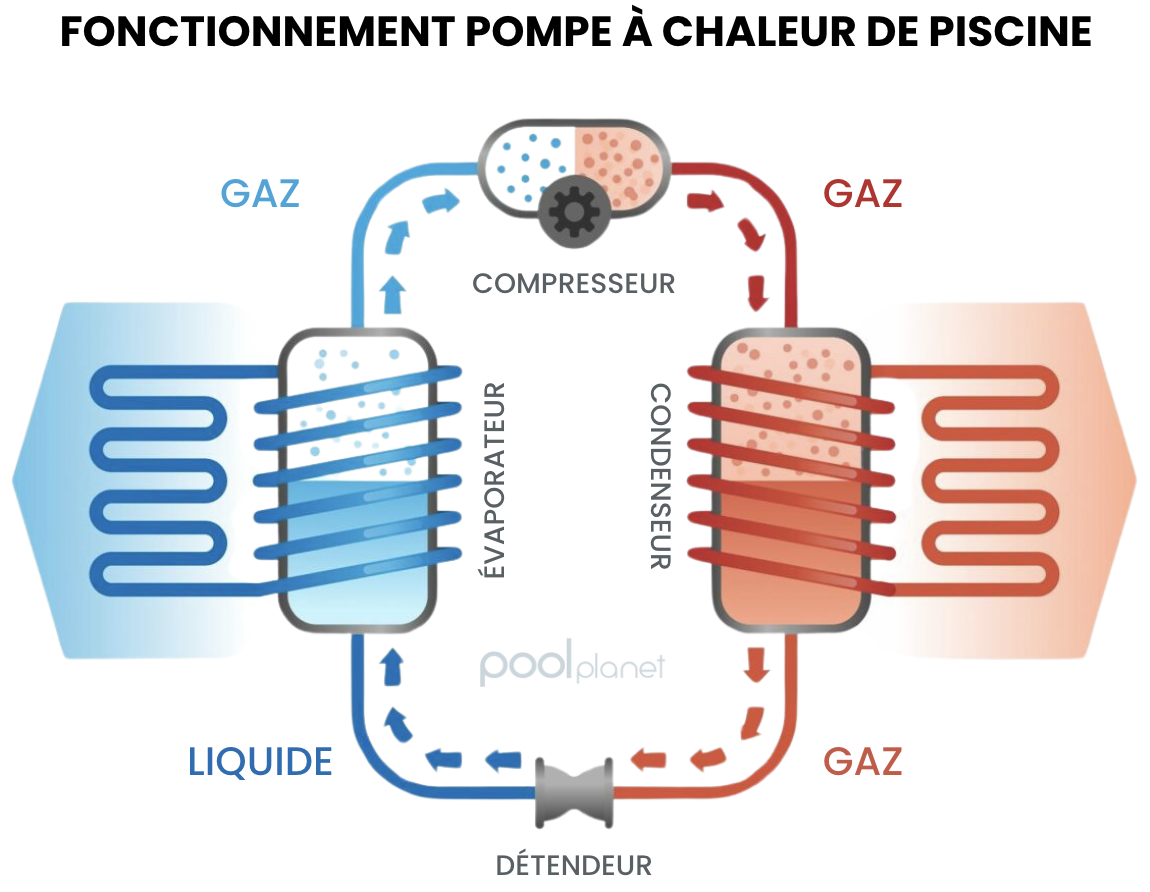
Essential components of the heat pump
To ensure optimal operation, a pool heat pump relies on four main elements:
- Evaporator: It captures calories contained in the ambient air, even when the air seems cool. This component plays a key role in transforming this energy into usable heat through the refrigerant, making the heat exchange process very efficient.
- Compressor: This element compresses the refrigerant to increase its temperature and pressure, making it possible to transfer a large amount of heat while enhancing thermal efficiency.
- Condenser: Once the fluid is heated, the condenser transfers this heat to the pool water. This process ensures a gradual and efficient temperature increase in your pool.
- Expansion valve: It reduces the pressure of the refrigerant to allow it to return to the evaporator, thus completing the thermal cycle.
Stages of the thermal cycle
The operation of a pool heat pump is based on essential steps:
- Calorie absorption: Ambient air is drawn into the system, and the evaporator recovers the calories needed to heat the refrigerant.
- Conversion to heat: Using the compressor and condenser, thermal energy is amplified and then transferred to the water, effectively increasing the pool's temperature.
- Continuous recycling: Once the heat is used, the refrigerant passes through the expansion valve, cools down, and starts a new cycle, allowing for a closed-loop operation.
What are the advantages of a pool heat pump?
Energy savings and efficiency
Adopting a pool heat pump allows for significant energy savings. Unlike traditional heating systems, it primarily uses air energy, significantly reducing electricity consumption. On average, heat pumps have a high Coefficient of Performance (COP), making them ideal for maintaining water at a pleasant temperature while protecting the environment. This makes it an economical and sustainable choice.
Optimization through accessories
To maximize the benefits of your heat pump, the use of accessories, such as a thermal cover, is highly recommended. These devices limit heat loss during cool nights or windy days. By reducing heat loss, you improve overall energy efficiency while extending the life of your equipment. The use of a solar cover can also complement its effectiveness.
How to choose the right heat pump for your pool?
Essential criteria
Selecting the right heat pump depends on several key factors:
- Water volume: The capacity of the equipment must match the water volume of your pool. Choosing a pump that is too small could result in increased energy consumption without guaranteeing a stable temperature.
- Climatic conditions: Colder regions require high-performance models at low temperatures. So-called all-season pumps or those equipped with full inverter technology will be ideal in this case.
- Technology: "On/off" models are simpler and more affordable but consume more, while full inverter versions adjust according to needs, offering optimal efficiency and long-term energy savings.

Comparison of heat pump types
Air-to-water heat pumps represent the most common solution for efficiently heating pools. They use ambient air as a renewable energy source. However, more advanced models, such as full inverter systems, offer intelligent regulation, adapting in real time to demand to maximize performance and limit energy costs.
Tips for optimizing pool heat pump performance
Installation and maintenance
Proper installation is essential to get the most out of your pump:
- Location choice: Ensure that the installation is in a well-ventilated and clear area, according to manufacturer's guidelines. This ensures optimal absorption of ambient air energy.
- Bypass integration: This device allows regulation of water flow in the system, an essential factor to prevent material damage and ensure homogeneous heat distribution.
Usage and programming
For optimal use, it is recommended to maintain a stable water temperature, avoiding frequent adjustments. Pair your heat pump with a timer or a connected control system. For example, mobile applications allow you to efficiently program operating cycles to minimize consumption while maintaining excellent thermal comfort.
Alternative methods to heat pumps for pool heating
Comparison with other heating systems
Although the heat pump is recognized for its efficiency and durability, other heating options are available:
- Electric heaters: Easy to install, but they consume a lot of electricity, making them costly in the long run.
- Heat exchangers: These devices use hot water from a domestic heating system to heat the pool, a suitable solution if your home already has this type of installation.
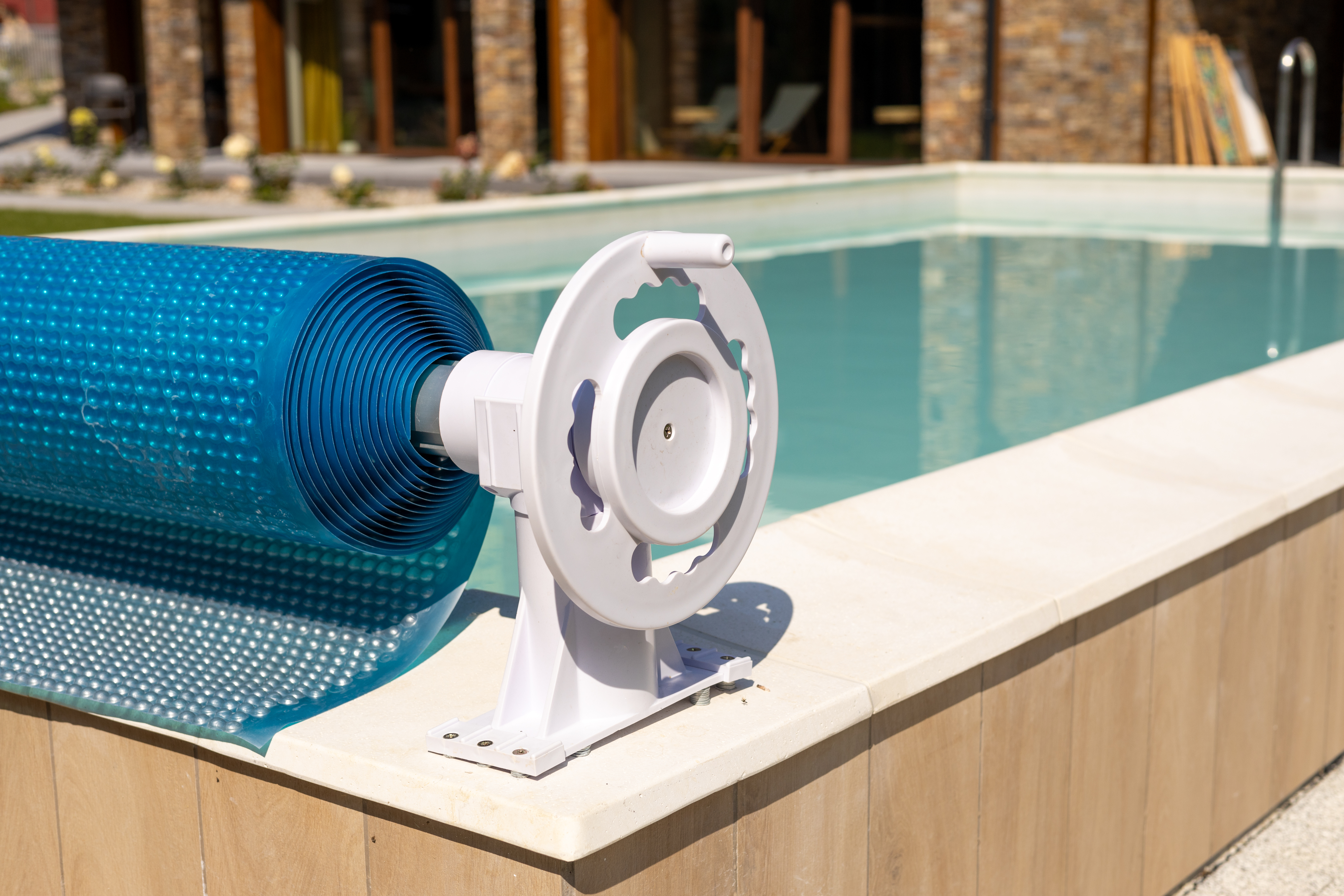
- Solar panels: Eco-friendly because they run on solar energy, but less efficient on cloudy days or in winter.
Advantages and disadvantages of alternative solutions
Each of these solutions has its advantages and limitations. For example, while a solar system offers a sustainable option, it is dependent on sunlight. Furthermore, some installations like heat exchangers require high installation costs. Ultimately, for consistent profitability and efficiency, the heat pump remains the most versatile solution.
Innovations and trends in pool heat pumps
Eco-responsible technologies
Today, advances in full inverter technologies have significantly improved the energy efficiency of heat pumps. They promote sensible consumption by adjusting to real conditions. This type of pump works well in extreme climates, whether low or high temperatures.
Towards connected heat pumps
In a decidedly modern approach, connected heat pumps allow for intelligent and convenient control. Via a mobile application, you can analyze the device's performance, improve its remote programming, and optimize settings in real time. This is a major innovation for users looking to combine comfort and economy.
FAQ on pool heat pumps
How does a heat pump work to heat a pool?
The heat pump extracts heat from the ambient air using an evaporator. This heat is then amplified by a compressor and transferred to the water via a condenser. An expansion valve completes the cycle, allowing the refrigerant to loop back.
Does a pool heat pump run all the time?
No, a pool heat pump does not run continuously. It stops once the desired water temperature is reached and restarts if it drops. This also depends on programming and usage.
How do I know if my pool heat pump is working?
Check if it is heating the water by monitoring the temperature rise. Also, ensure the fan is running and the unit shows no error codes. A constant water flow is also necessary for proper operation.
How long does it take to heat a pool with a heat pump?
On average, a heat pump raises the water temperature by 1 to 2°C per day, depending on the size of the pool, the outside temperature, and the pump's power. A cover can reduce heating time.
What is the role of the compressor in a heat pump?
The compressor increases the temperature and pressure of the refrigerant, thereby maximizing heat transfer to the pool water. It is a key element in the pump's thermal efficiency.
Is a pool heat pump economical?
Yes, it consumes little electricity compared to traditional heaters. The heat primarily comes from the ambient air, and its high coefficient of performance ensures excellent energy efficiency.
What accessories optimize a pool heat pump?
A thermal cover or a solar cover reduces heat loss. A connected control system also allows for efficient programming of heating cycles for optimized energy consumption.



































