


Pool water treatment is essential to ensure a healthy and pleasant swimming experience. Whether you opt for chlorine, bromine, or alternative solutions like a salt chlorinator, each system requires special attention. Regular filtration and maintenance, combined with the right products and an efficient pump, help combat algae and maintain crystal-clear water. Shock treatment may sometimes be necessary to restore the pool's balance. Discover our tips for optimizing your pool's treatment while controlling costs.
The basics of pool water treatment
To fully enjoy a clear, healthy, and pleasant pool, it is essential to master the basics of pool treatment. Well-maintained water not only ensures bathers' comfort but also extends the life of equipment such as the pump or filtration systems. The first crucial step is to regularly check pH levels. A pH between 7.2 and 7.6 is ideal for ensuring maximum effectiveness of disinfectant products like chlorine.
At the same time, it is essential to monitor the presence of disinfectants to prevent the formation of algae or the proliferation of bacteria in the pool. Using simple tools, such as test strips or specific kits, helps maintain chemical balance. For increased effectiveness, combine chemical treatment with efficient filtration. A quality pump allows for regular water renewal and impurity removal. Do not neglect to clean your filters and use a skimmer net to remove debris from the surface. These maintenance actions ensure optimal management for your pools.
Tips for effective slow-release chlorine treatment
Adjusting filtration time for healthy water
Well-calibrated filtration is essential to guarantee the purity of your pool water. Here's a simple rule: divide your water temperature by two to determine the number of hours the filtration system needs to run. For example, if the water temperature reaches 24 °C, a minimum of 12 hours of filtration is essential to prevent dirt accumulation. An efficient system maintains overall balance while enhancing the role of disinfectants.
Also, consider the importance of proper chlorine adjustment. Combined with complementary treatments like active oxygen, shock treatment can be useful for eliminating stubborn impurities in the pool. Thus, the combination of appropriate equipment and a high-performance pool pump ensures clean and healthy water for everyone.
Limiting stabilizer buildup to avoid imbalances
Slow-release chlorine is often enriched with stabilizer, a substance that protects chlorine from rapid degradation under UV rays. However, an excessive concentration of stabilizer can lead to a chemical imbalance in the water, thereby reducing the overall effectiveness of your treatment. To avoid this problem, regularly check this parameter. If necessary, a partial renewal of your pool water can correct the situation.
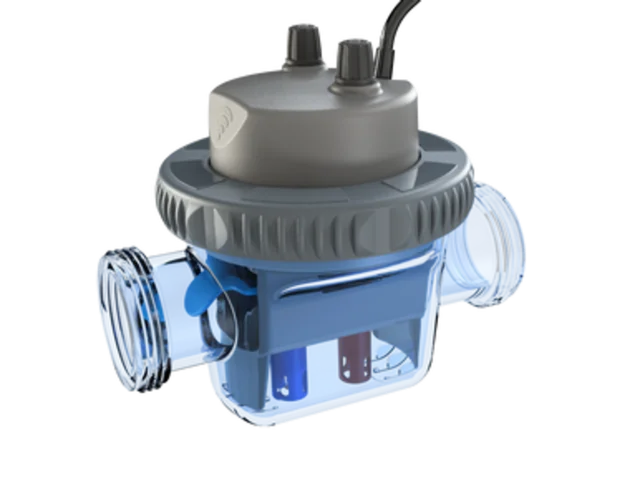
In addition, the use of a salt chlorinator considerably simplifies treatment management. This device generates chlorine from the salt in the water, while minimizing the need for stabilizer. This modern solution is ideal for maintaining a balanced pool at a reasonable cost.

Chlorine alternatives: chlorine-free pool water treatment
UV treatment: effective and ecological purification
Ultraviolet (UV) treatment is an innovative technology that neutralizes microorganisms using a UV lamp placed in the filtration circuit. This process destroys viruses, bacteria, and algae without the addition of chemicals, thus offering an ecological and sustainable solution. While it does not completely replace a disinfectant, it significantly reduces the use of chemicals and allows for purer, more natural water. For optimal effectiveness, it is recommended to combine it with a complementary treatment, such as active oxygen or a low dose of chlorine.

Bromine: a stable and effective alternative
Less known but just as effective, bromine is an efficient disinfectant, especially in hot waters like spas. Unlike chlorine, it remains stable at high temperatures and maintains its effectiveness even in the presence of pH variations. With no aggressive odor, it is ideal for spas and indoor pools. Its prolonged action makes it a reliable alternative for water treatment without the drawbacks of chlorine.
Managing common pool problems
Limescale deposits: how to eliminate them effectively
In regions with hard water, limescale deposits remain a major nuisance. To eliminate them, start by lowering the pH to about 7 and apply a specific anti-limescale product directly to the affected areas. Using a limescale sequestrant integrated into your maintenance routine can prevent their future appearance, thus ensuring a pool free of deposits that dull the appearance of your water.
Cloudy or green pool water: quick solutions to apply
Cloudy or green pool water can be the result of chemical imbalance or a lack of disinfectants. A thorough analysis of parameters (pH, alkalinity, chlorine level) will help identify the source of the problem. Depending on the severity, apply a shock treatment with chlorine or active oxygen, and perform prolonged filtration. For extreme cases, a partial or complete drainage may be necessary, followed by replenishment with products suitable for treatment.
Why winterizing is essential for your pool
Winterizing helps protect your pool during the colder months. By adjusting the pH and adding a winterizing product, you limit the risk of damage often caused by freezing or algae growth. Thorough cleaning of the system, combined with the use of a suitable cover, will preserve the water quality and equipment such as the pump for the following season.
New essential equipment for optimal treatment
The cleaning robot: automating regular maintenance
Modern cleaning robots are revolutionizing pool maintenance. These autonomous devices clean both the bottom and walls of the pool with formidable efficiency. To optimize your pool water treatment, choose economical and efficient models. In addition, these robots reduce energy consumption, while ensuring impeccably clean water.
Advanced filtration systems for better water control
Innovations in filtration systems significantly improve water management. Cartridge or diatomaceous earth filters are designed to capture the finest impurity particles. Combined with connected filtration pumps offered by renowned brands such as CCEI or Pentair, these technologies offer optimal management while minimizing long-term costs.
FAQ
What is the simplest pool treatment?
For a simple treatment, use disinfectant products like chlorine or bromine, complemented by good filtration. Regularly monitor the pH and adjust it between 7.2 and 7.6. Weekly maintenance with filter cleaning and a skimmer net is sufficient.
How do I make my pool water crystal clear?
Ensure good chemical balance by controlling pH and chlorine levels. Add a flocculant to capture fine impurities and clean filters regularly. Efficient filtration, combined with meticulous maintenance, guarantees clear water.
What can replace pool flocculant?
Products like active oxygen or natural clarifiers can replace flocculant. They help eliminate suspended particles, often combined with efficient filtration. These alternatives are environmentally friendly and ideal for preserving the pool's ecosystem.
How to maintain your pool for dummies?
Maintain your pool in a few simple steps: check pH and disinfectants weekly, clean filters, use a skimmer net for debris, and adjust filtration according to temperature. Regular cleaning of the walls will also prevent algae and impurities.
Why is it important to monitor water pH?
pH affects the effectiveness of disinfectants like chlorine and water quality. A value between 7.2 and 7.6 is ideal for ensuring good disinfection and avoiding irritation for bathers. Water with an unbalanced pH can also damage equipment.
What alternatives to chlorine exist for water treatment?
UV treatment purifies water without chemicals, while bromine provides effective and odorless disinfection, even at high temperatures.
How to remove limescale deposits in my pool?
Reduce the pH to about 7 and apply an anti-limescale product to the affected areas. A limescale sequestrant integrated into maintenance will prevent their appearance. To better manage this problem, limit excessive use of stabilizer and monitor water hardness.



































