


Manually cleaning a swimming pool is an essential task for maintaining crystal-clear water and a healthy swimming environment. While some owners opt for automated solutions, manual techniques remain effective and economical. This comprehensive guide will reveal the best methods for cleaning your pool by hand, as well as tips for optimizing your efforts.
Manually cleaning a swimming pool is essential for maintaining clean and healthy water. Here are the key points to remember:
- Required equipment: skimmer net, brush, manual vacuum cleaner, etc.
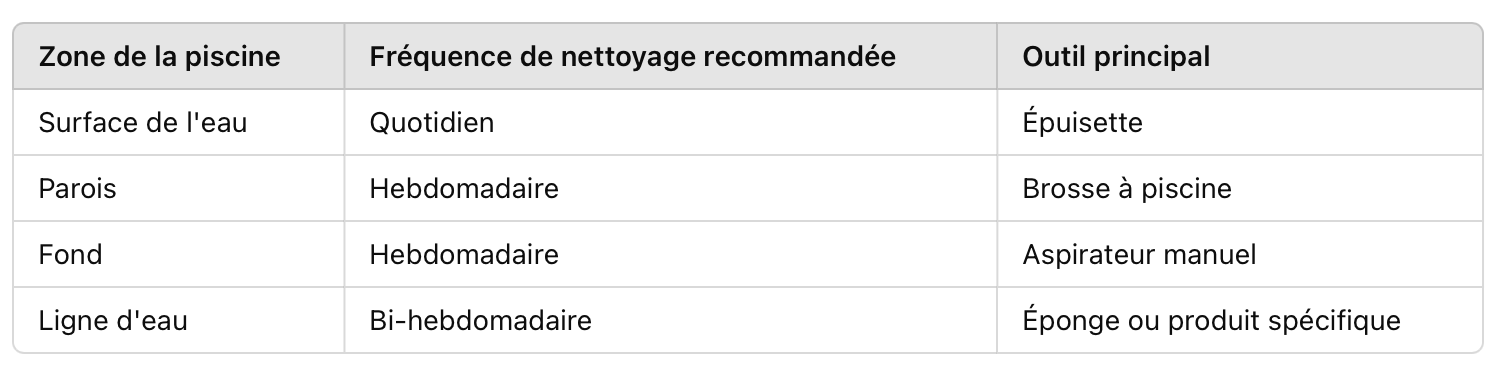
- Cleaning steps: skimming, brushing, vacuuming, waterline cleaning
- Recommended frequency: at least once a week
- Optimization tips: use a cover, alternate brush types
- Automated alternatives: robotic cleaners for regular maintenance
Essential equipment for effective manual cleaning
Before you start cleaning your pool, it's essential to have the right equipment. Suitable materials will allow you to do a quicker and more efficient job. Here is a list of essential tools for optimal manual cleaning:
- Skimmer net or skimmer
- Pool brush
- Manual pool vacuum cleaner
- Vacuum hose
- Telescopic pole
- Water treatment products
- Protective gloves
The skimmer net is essential for removing floating debris such as leaves, insects, or small objects. The pool brush will help you scrub the walls and bottom of the pool to dislodge algae and ingrained dirt. The manual vacuum cleaner, meanwhile, will effectively vacuum up impurities deposited on the bottom.
The telescopic pole is a versatile accessory that adapts to most cleaning tools, thus offering you better reach. Don't forget protective gloves to protect your hands from chemicals and repeated rubbing.
Step-by-step manual cleaning techniques
Effective manual pool cleaning requires a methodical approach. Follow these steps for best results:
- Surface skimming: Start by using the skimmer net to remove all floating debris. This preliminary step will make the following steps easier by preventing these elements from settling on the bottom.
- Brushing the walls and bottom: Vigorously scrub the walls and bottom of the pool with a brush suited to your liner. Pay particular attention to corners and hard-to-reach areas where algae tends to grow.
- Vacuuming impurities: Use the manual vacuum cleaner to remove dirt dislodged by brushing. Start from the deepest point and move towards shallower areas with slow and regular movements.
- Cleaning the waterline: With a sponge or a specific product, carefully clean the waterline to remove limescale deposits and greasy residues.
- Water treatment: After cleaning, check and adjust pH and chlorine levels to ensure healthy and balanced water.
To optimize your time and effort, it is recommended to clean your pool at least once a week. This frequency may vary depending on your pool's environment and usage.
Tips for more efficient manual cleaning
While manual cleaning takes time and energy, some tips can make this task easier and more efficient. Here are some tips to optimize your cleaning sessions:
Prevent dirt buildup by installing a protective cover when the pool is not in use. This will significantly reduce the amount of debris to be removed during cleaning. Also, remember to regularly clean the pool surroundings to limit the amount of dirt and leaves entering the water.
For more effective brushing, always start from the top of the walls and gradually move down to the bottom. This technique allows dirt to settle at the bottom, facilitating subsequent vacuuming. Don't hesitate to alternate brush types depending on the areas to be cleaned: a soft brush for delicate liners and a harder brush for resistant coatings.
When vacuuming, regularly empty the vacuum cleaner bag or filter to maintain optimal suction power. If your pool is particularly dirty, consider spreading the cleaning over several days to avoid saturating the filtration system.
Automated alternatives for pool cleaning
While manual techniques are effective, many pool owners are turning to automated solutions to save time and reduce physical effort. Among these alternatives, pool robots hold a prominent place.
Robotic cleaners are autonomous devices that travel the bottom and walls of the pool to vacuum debris and brush surfaces. They come in several categories:
- Hydraulic robots: Connected to the pool's filtration system, they use water pressure to move and clean.
- Electric robots: Powered by a cable, they have their own motor and filtration system, generally offering better performance.
- Battery-powered robots: Cordless, they offer great freedom of movement but require regular recharging.
These robots have the advantage of being able to operate unsupervised, effectively freeing up time for other activities. They are particularly effective in maintaining constant cleanliness of the pool, similarly reducing the frequency of in-depth manual cleaning.
Nevertheless, the initial investment can be substantial, and some models require regular maintenance. Also, in some cases, additional manual cleaning is still necessary for hard-to-reach areas or for occasional deep cleaning.
Ultimately, whether you opt for manual or automated cleaning, the key is to maintain regularity in your pool's upkeep. Frequent and thorough cleaning will ensure clear and healthy water, thereby extending the pleasure of swimming throughout the season.



































