


Is your pool pump showing signs of weakness? There comes a time when it becomes necessary to replace a filter pump to ensure healthy, clear water in your pool. This operation, which may seem complex, is nonetheless essential when your equipment malfunctions, such as abnormal noises, leaks, or a drop in performance. In this article, we guide you step-by-step to understand when and how to proceed with the replacement, whether you wish to do it yourself or call a professional.
Why and when to replace a filter pump?
The filter pump is an essential component for maintaining crystal-clear and healthy water in your pool. Its main role is to ensure water circulation in the filtration system to effectively remove impurities. However, over time, this equipment may show signs of aging or failure, requiring intervention.
Signs of a failing filter pump often include unusual or abnormal noises, a noticeable drop in performance, water leaks at connections or the motor, as well as repeated electrical problems. If these symptoms appear, it is highly likely that you should consider a replacement before the situation worsens.
Generally, the lifespan of a filter pump is between 8 and 10 years, provided that adequate maintenance is performed regularly. Usage conditions, operating cycles, and the quality of manufacturing materials will also influence this duration. However, recurrent or major breakdowns may require premature replacement.
Detailed steps for replacing a filter pump
Space preparation and necessary equipment
Before starting the intervention, it is essential to carefully prepare the site and ensure that all the tools needed to replace a filter pump are at hand.
- Switch off the pump by completely disconnecting the electrical supply to avoid any risk of accident.
- Secure the technical room so that no object obstructs or endangers the smooth progress of the work.
Here is a list of tools and materials needed to replace a filter pump:
- Open-end or box wrenches suitable for fittings
- Screwdrivers (flat and Phillips)
- A replacement gasket if needed
- Teflon tape to ensure optimal sealing
Dismantling the old pump
Dismantling the old pump must be done methodically to properly prepare for the installation of a new filter pump.
- Cut off the hydraulic supply by closing the suction and discharge valves to prevent accidental leaks.
- Loosen the threaded fittings to detach the pump from the existing pipes.
- Disconnect the electrical wires, precisely noting their initial position, which will facilitate the connection of the new pump.
Installing the new pump
After removing the obsolete equipment, it's time to install your new filter pump.
- Check that the dimensions of your new pump are compatible with the existing location and piping system.
- Carefully connect the pipes, making sure to apply Teflon tape around the fittings to prevent any future leaks.
- Reconnect the electrical connections strictly following the manufacturer's instructions to ensure safe and optimal operation.
- Perform a test by powering on the pump and gradually opening the valves to restart water circulation.
Tips for choosing the right filter pump
The choice of an efficient filter pump must be based on well-defined technical criteria:
- Flow rate: it must be adapted to the total volume of water in your pool for a complete filtration cycle in 4 to 6 hours.
- Pump power: it must correspond to the capacity of the hydraulic system, particularly the diameter of the pipes and the filter.
- Compatibility with other equipment, such as skimmers or supply pipes.
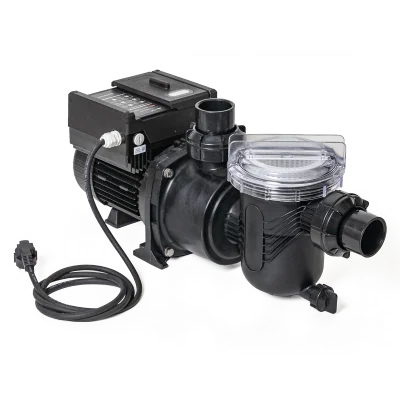
Feel free to compare different filter pump models. For example, variable speed pumps allow for optimizing both performance and energy consumption.
Solutions for common breakdowns before replacing a filter pump
Identify and solve frequent problems
Sometimes, directly replacing a filter pump is not necessarily required. Some minor problems can be resolved quickly:
- Unusual noises or vibrations: these symptoms can be caused by a motor obstructed by debris or sand. Carefully clean the components.
- Water leaks: check the condition of the gaskets or reapply Teflon tape to the fittings to improve sealing.
Diagnostics to perform
If these solutions are not enough, perform in-depth diagnostics:
- Test the motor to ensure it is not overheating, which could indicate fouling or internal wear.
- Inspect the electrical components and ensure that the connections have no defects.
Optimizing the lifespan of your new filter pump
After installing new equipment, it is essential to adopt simple practices to prolong its lifespan:
- Frequently clean the pre-filter basket to prevent obstruction by debris.
- Regularly check the connections and electrical cables to identify any signs of degradation.
It is also recommended to maintain a well-ventilated technical room, protected from bad weather. This helps limit the effects of humidity and temperature variations, thus reducing the risk of breakdown.
Cost and professional installation: when to call an expert?
The cost of replacing a filter pump generally ranges from €200 to €1000, depending on the model and chosen features. A variable speed pump, for example, may represent a higher investment but will lead to significant electricity savings in the long term.
In the case of a complex installation or if you are not confident in performing the necessary manipulations, calling a professional is a recommended solution. At PoolPlanet, we work with qualified experts who guarantee precise and standard-compliant installation.
For any assistance or to choose the pump model best suited to your specific needs, do not hesitate to contact our team. We will be happy to assist you in optimizing your pool's filtration and maintenance.
FAQ
How to seal a pool pump leak?
To seal a leak, identify its origin (worn gaskets, connections, cracks). Replace the gaskets or apply a sealant. If the leak persists, consider replacing the damaged part to avoid aggravating the problem.
How to replace a water pump?
Cut off the power, dismantle the old pump, remove fittings and wires. Install the new pump, tighten the fittings, apply Teflon tape, and connect the electrical connections. Test the system to ensure proper operation.
Why can't I prime the pool pump?
An unprimed pump can be caused by a clogged filter, an air leak, or insufficient water level. Check the pre-filter basket, ensure the valves are open, and there is no air in the hydraulic circuit.
How to pump water from a pool without a pump?
Use a garden hose to create a siphon effect. Place one end in the water and suck on the other until the water starts to flow naturally. Position the free end lower than the pool's water level.
What factors should I consider when choosing a new filter pump?
Consider the volume of water to be filtered, the required flow rate, compatibility with your current system, and energy consumption. Variable speed pumps offer better efficiency while reducing energy costs.
How to optimize the lifespan of my filter pump?
Regularly clean the pre-filter, check the connections and cables, and keep the pump in a dry and ventilated area. Appropriate periodic maintenance prevents breakdowns and prolongs the equipment's lifespan.
When should I replace my filter pump?
Replace your pump if it exhibits unusual noises, decreased performance, recurrent leaks, or electrical problems. Generally, a well-maintained pump lasts between 8 and 10 years.



































