


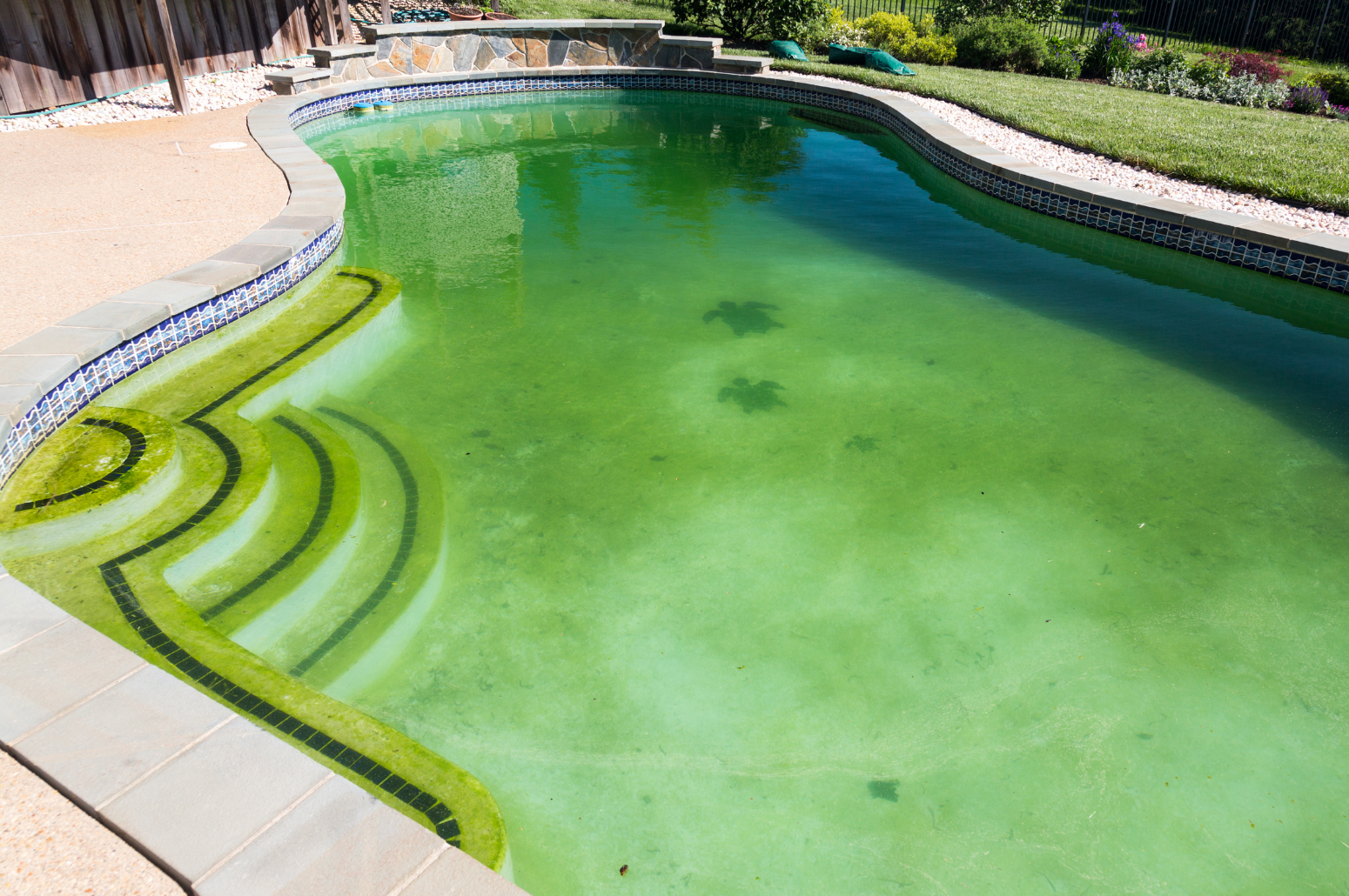
Are you wondering what happens when you decide not to treat your pool? The consequences are rapid and numerous. In just a few days, the water becomes cloudy and green due to algae. Limescale deposits appear on the walls while bacteria multiply. Without regular maintenance, water quality quickly deteriorates, creating health risks for swimmers and damaging equipment. Filtration and treatment are essential for maintaining clean and healthy water. An unmaintained pool quickly becomes unusable and dangerous.
What happens if I don't treat my pool?
If you decide not to treat your pool, several problems will quickly appear. In just a few days, the water will become cloudy and green due to developing algae. Limescale deposits will form on the walls and equipment. Water quality rapidly deteriorates because 80% of its purity depends on good filtration and appropriate treatment. Without maintenance, your pool becomes an ideal environment for potentially dangerous bacteria and microorganisms.
Risks to water quality and equipment
Untreated water deteriorates very quickly. Without disinfectant, the pH becomes unbalanced, facilitating scale formation and the appearance of algae. These deposits can obstruct filters, damage the pump, and other equipment. Limescale incrustations become difficult to remove over time and can significantly reduce the lifespan of your equipment. Water turbidity can persist for several days even after treatment resumes.
Impact on swimmer health
Swimming in an untreated pool poses serious health risks. The water becomes a breeding ground for pathogenic microorganisms that can cause various infections. Risks include skin irritations, eye infections, and respiratory problems. In severe cases, certain bacteria like Legionella can cause potentially fatal diseases.
What are the consequences of not treating your pool?
Algae development and water cloudiness
When you neglect pool treatment, algae proliferate rapidly. In just a few days, clear water turns green or brown and becomes cloudy. This phenomenon accelerates in summer when heat promotes their development. These algae form a slippery film on the pool walls and bottom, making swimming unpleasant and potentially dangerous.
Increased turbidity and limescale incrustations
Without regular treatment, the water becomes increasingly cloudy. This turbidity is caused by suspended particles and chemical imbalances. Simultaneously, limescale deposits accumulate on surfaces and equipment. These incrustations are particularly visible on the waterline and around metallic parts such as ladders. An unbalanced pH (outside the ideal range of 7.2-7.4) accelerates this phenomenon, necessitating intensive cleaning later on.
Proliferation of bacteria and harmful microorganisms
An untreated pool quickly becomes a real breeding ground. Bacteria, viruses, and other microorganisms develop freely. This proliferation is invisible to the naked eye but poses a real danger. In some cases, bacteria like Legionella can multiply and cause Legionnaires' disease, a serious illness that can be fatal in 10 to 15% of cases. Rain and bad weather worsen the situation by bringing new impurities and further unbalancing the pH.

Can not treating your pool lead to additional costs?
Costs related to equipment repair and replacement
Material damage caused by the absence of treatment leads to significant expenses. Limescale and corrosion attack equipment such as pumps, filters, and heating systems. Pipes can become obstructed, seals can deteriorate, and liners can stain permanently. These degradations often require costly repairs, or even the complete replacement of certain elements. In the long run, not treating your pool costs much more than regular maintenance.
Increased time spent on maintenance
Restoring a neglected pool requires much more time and effort than regular maintenance. Cleaning algae-covered walls, removing limescale deposits, and clarifying very cloudy water can take several days, or even weeks. It will be necessary to carry out shock treatments, mechanically clean surfaces, drain, and sometimes even renew a large part of the water. These interventions are not only tedious but also more complex than simple preventive maintenance.
Energy consumption and excessive use of chemicals
To fix an untreated pool, you will need to use more chemicals and run your filtration system longer. Energy consumption can increase considerably, with costs potentially reaching several hundred euros per year. The necessary shock treatment products (chlorine, algaecides, flocculants) also represent a significant expense. In addition, partial water renewal (at least 1/3 of the volume each season) further adds to the overall costs.

What are the health risks of not treating your pool?
Skin and eye irritations
Swimming in an untreated pool directly exposes your skin and eyes to irritating substances. Skin reactions such as itching, redness, and rashes are common. Eyes become red, irritated, and can develop conjunctivitis. These problems are caused by contact with microorganisms and their decomposition byproducts present in the water. People with sensitive skin or conditions like eczema are particularly vulnerable.
Respiratory infections and more serious diseases (Legionnaires' disease)
Inhaling aerosols from contaminated water can cause various respiratory infections. The most dangerous is undoubtedly Legionnaires' disease, caused by the Legionella bacteria which develops easily in stagnant, untreated water. This disease manifests as symptoms similar to severe pneumonia and can be fatal in 10 to 15% of cases. Other less serious but uncomfortable respiratory infections can also occur after exposure to untreated water.
Water toxicity and development of pathogenic organisms
A pool without treatment quickly becomes an ideal reservoir for many pathogenic organisms. Parasites like Giardia or Cryptosporidium can develop there and cause gastrointestinal infections. Other microorganisms can cause ear infections, urinary tract infections, or various fungal infections. The risk of infection increases with the length of time the pool remains untreated. Children, the elderly, and those with weakened immune systems are particularly at risk.

What are the variations of not treating your pool?
Not treating your pool in winter: what are the consequences?
Neglecting your pool's winterization might seem tempting but leads to serious consequences in the spring. Without proper winter treatment, the water slowly degrades even in cold weather. Hibernating algae develop, and limescale deposits become deeply ingrained. Restarting the pool will then be much more difficult and costly. Unprotected equipment can also suffer damage from frost or corrosion, requiring expensive repairs.
Neglecting regular treatment during the warm season
During the summer, even a few days without treatment can be enough for your pool to significantly deteriorate. Heat accelerates all biological and chemical processes in the water. Algae can appear in just 48 hours, especially after a storm or a period of high heat. The pH quickly becomes unbalanced, and bacteria multiply at high speed. Restoring water quality will then require many more products and efforts than simple daily maintenance.
Risks associated with using inadequate products or insufficient quantities
Using the wrong products or insufficient doses is almost equivalent to not treating your pool. Underdosing disinfectant does not effectively eliminate microorganisms. An improperly balanced pH (outside the 7.2-7.4 range) significantly reduces the effectiveness of treatments and promotes algae growth. Using poor quality or incompatible products can even worsen certain problems such as turbidity or skin irritations.
| Consequences of insufficient treatment | Consequences of adequate treatment |
|---|---|
| Cloudy and greenish water | Clear and limpid water |
| Development of algae and bacteria | Healthy and disinfected water |
| Risks of infections and irritations | Safe and pleasant swimming |
| Equipment damage | Equipment protection and longevity |
| High repair costs | Long-term savings |
Conclusion: why it is essential to treat your pool regularly
The benefits of clear, healthy and safe water
Regularly treating your pool guarantees clear and healthy water for all swimmers. Well-balanced water offers a pleasant swimming experience, free from unpleasant odors or irritations. You fully enjoy your investment and preserve the health of your family and guests. The clarity of the water also allows you to see the bottom of the pool, an essential element for safety, particularly if children use the pool.
Long-term impact on pool durability
Regular treatment significantly extends the lifespan of your pool and its equipment. Preventive maintenance avoids costly repairs and premature equipment replacements. The pool liner remains in good condition longer, pipes do not become obstructed, and the pump operates optimally. In the long term, this preventive approach represents substantial savings compared to the costs incurred by neglect.
Tips for effective and preventive maintenance
To keep your pool in perfect condition, follow these essential recommendations:
- Regularly check the pH (ideally between 7.2 and 7.4) and adjust if necessary
- Check and maintain an adequate level of disinfectant (chlorine or other)
- Clean filters according to the manufacturer's recommendations
- Renew approximately 1/3 of the water volume each season
- Perform proper winterization if you do not use your pool in winter
By following these simple tips, you will avoid most of the problems associated with not treating your pool. The PoolPlanet team recommends adopting a weekly maintenance routine that takes little time but ensures quality water and a pool in good condition for many years. Remember that prevention is always less costly and less restrictive than corrective measures.
FAQ
How can I tell if my pool water is dead?
To tell if your pool water is dead, check if it is cloudy or unpleasant to the touch, and examine its smell and color. Dead water may show algae and bacteria proliferation, indicating it needs urgent treatment.
How long can a pool go without filtration?
A pool can go without filtration for a maximum of 24 to 48 hours. After this time, the water begins to degrade, promoting the proliferation of algae and bacteria, and becoming unsafe for swimming.
What bacteria are in pools?
Bacteria in pools include Escherichia coli, which comes from fecal matter, and Pseudomonas aeruginosa, responsible for skin infections. Poor water management promotes their proliferation.
Is it possible to swim in a cloudy pool?
It is not recommended to swim in a cloudy pool. Cloudy water can be a sign of the presence of bacteria or algae, which can make swimming dangerous to health.
What happens if I don't treat my pool?
If you don't treat your pool, the water can quickly become cloudy and promote the proliferation of algae and bacteria. This will make it unsuitable for swimming and can damage the pool and its equipment.
What are the risks associated with not treating pool water?
The risks associated with not treating pool water include the possibility of the water turning green due to algae. This can also lead to health problems, such as infections due to microorganisms present in untreated water.



































