


Are you wondering about the lifespan of a pool liner? This essential covering for your pool's watertightness generally lasts between 10 and 18 years. Several factors influence its longevity: the quality of the chosen material, UV exposure, regular maintenance, and the chemical balance of the water. To maximize its lifespan, it's important to monitor for signs of wear such as discoloration, wrinkles, or cracks. Good maintenance and regular checks will allow you to enjoy your pool with peace of mind for many years.
Signs of wear on a pool liner
Understanding indicators of degradation
Your pool liner is like your pool's skin. Over time, it shows signs of aging. Several visible clues can alert you that your liner is starting to wear out. Discoloration is often the first sign. If your liner loses its original vibrant color, it means that UV rays or chemicals have damaged it.
Cracks and fissures are more serious signs. They often appear near the waterline or in the corners. These damages can cause leaks and should be examined quickly. You might also notice wrinkles or detachment of the liner. This indicates that the material has lost its elasticity and no longer properly ensures the watertightness of your pool.
Frequency of necessary inspections
To properly monitor the condition of your liner, regular inspections are necessary. It is recommended to carefully examine your liner at least once a year. The best time is in the spring, when you are preparing your pool for the summer season.
During these inspections, carefully check the entire surface of the liner, especially the areas near the stairs, corners, and waterline. These areas generally wear out faster. Don't forget to also check underwater, where problems can hide. A well-monitored pool liner lifespan guarantees fewer unpleasant surprises.
Pool liner lifespan
Factors influencing longevity
The lifespan of a pool liner typically ranges between 10 and 18 years. This wide difference is explained by several important factors. The thickness of the liner plays a major role. A thicker liner will be more resistant to time and mechanical damage. Standard liners measure between 0.75 mm and 1.5 mm thick.
Exposure to UV rays is another key factor. A pool constantly exposed to the sun will see its liner degrade more quickly. Water quality and chemical balance are also crucial. A pH that is too high or too low, or an excessive concentration of chlorine can attack the material and reduce its lifespan.
Tips for extending the lifespan of a pool liner
To maximize the longevity of your liner, a few simple maintenance practices make all the difference. Always maintain a good chemical balance in the water. Regularly check the pH (ideally between 7.2 and 7.6) and chlorine level.
Protect your pool with a cover when it is not in use. This reduces UV exposure and limits evaporation, which can concentrate chemicals. Gently but regularly clean your liner, especially the waterline where grease and impurities accumulate. Avoid overly harsh brushes that could scratch the liner.
In winter, never completely empty your pool if it has a liner. The weight of the water helps keep the liner in place. An empty pool exposes the liner to risks of shrinkage and cracking.
When to change your pool liner?
Assessing the right time for replacement
The ideal time to replace your liner generally comes after 10 to 15 years of use, even with good maintenance. However, certain signs indicate that it's time to change it, regardless of its age. If you notice persistent leaks despite repairs, that's a clear signal.
Spring is often the best time to make this change. Temperatures are mild, which allows the liner to stretch properly during installation. Plus, it prepares you for the swimming season. Don't wait until your liner is completely deteriorated to plan its replacement. An overly damaged liner can cause damage to your pool's structure.
Importance of maintenance for a prolonged lifespan
Regular maintenance is essential to achieve the maximum pool liner lifespan. Preventive cleaning of your liner should be part of your routine. Use specific pool products; avoid abrasive cleaners that can damage the liner surface.
Rigorously control the chemicals you add to the water. Always pour them into the center of the pool, never directly against the walls, to avoid stains and premature degradation of the liner. Promptly repair small tears or cracks as soon as they appear. Specific repair kits exist and can significantly extend the life of your liner.

Options for replacement and renovation
Choosing between professional and DIY
When it comes time to replace your liner, you have two main options: hiring an experienced professional or doing the installation yourself. Each choice has advantages and disadvantages that need to be carefully considered.
Installation by a professional generally guarantees precise and durable work. Experts have the right tools and know the techniques to avoid wrinkles and ensure perfect watertightness. Moreover, their work is often guaranteed. However, this option is more expensive, with prices that can range between €1500 and €3000 depending on the size of your pool.
DIY installation can significantly reduce costs, but requires time and patience. It's a project that requires meticulousness and ideally the help of another person. If you choose this route, plan a whole weekend for this work and meticulously follow the manufacturer's instructions.
Comparison of different types of liners available
There are several types of liners on the market, each with its own characteristics. The choice of material directly influences the lifespan and price.
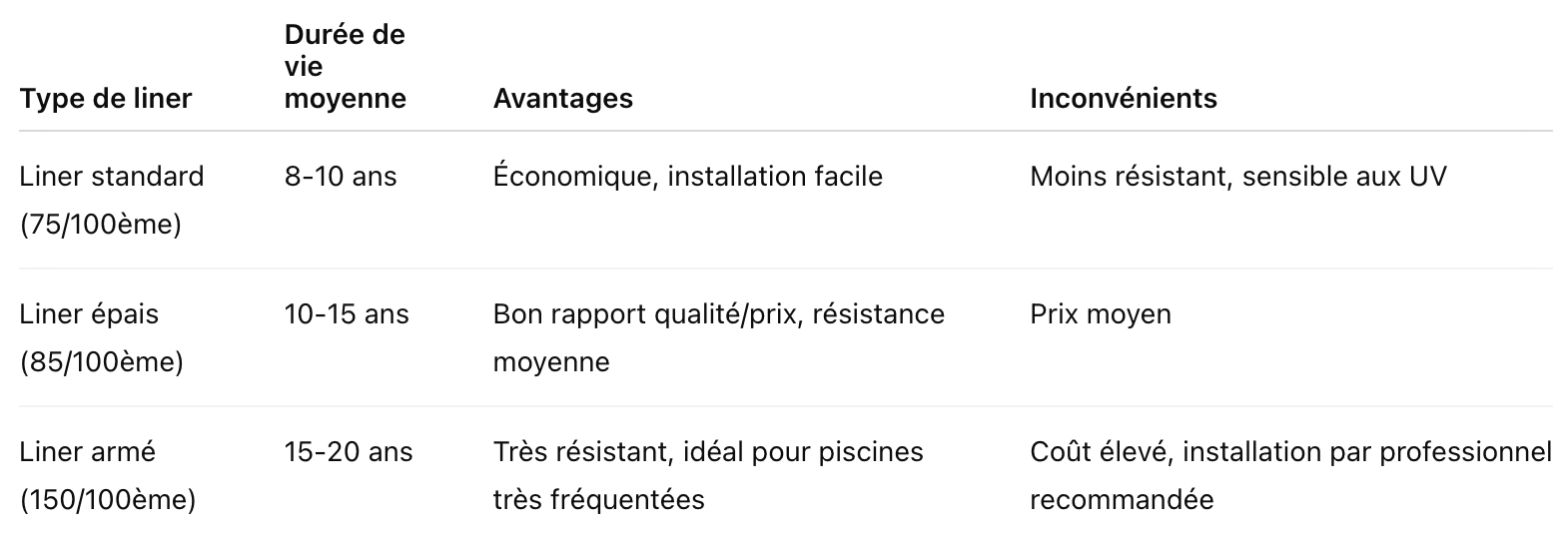
Liners are also available in different finishes and colors. Darker shades absorb heat better but can fade more quickly. Printed patterns can hide small imperfections but are generally more expensive than plain liners.
Conclusion on the lifespan of a pool liner
Summary of key points
The lifespan of a pool liner depends on many factors that we have explored. On average, a liner lasts between 10 and 18 years, but this duration can vary considerably depending on the quality of the material, usage conditions, and the maintenance you provide.
Signs of wear such as discoloration, cracking, or wrinkles are important indicators to monitor. When these signs become too numerous or affect the watertightness of your pool, it's time to consider a replacement.
The choice of a new liner should be made based on your budget, but also on how you use your pool. A thicker or reinforced liner represents a larger initial investment, but can prove economical in the long run due to its superior durability.
Importance of good maintenance and regular monitoring
Maintenance remains the key to extending your liner's lifespan. Annual inspections will allow you to detect and quickly repair small problems before they become major. The chemical balance of the water plays a fundamental role: too much chlorine or an unsuitable pH can quickly deteriorate even the best liners.
At PoolPlanet, we recommend investing in quality equipment for your pool's maintenance. Well-calibrated water treatment systems reduce the use of aggressive chemicals while maintaining perfectly healthy water. Our connected solutions also help you monitor your water parameters and optimize your pool's maintenance.
Remember that a well-maintained liner not only lasts longer but also provides clearer water and a more enjoyable swimming experience. Take care of your liner, and it will take care of your pool for many years.
FAQ
When should I change my pool liner?
The ideal time to replace your liner is generally between 10 and 15 years of use. If you notice persistent leaks despite repairs, it's a clear signal that it's time to change it, regardless of its age.
How can I tell if my pool liner is dead?
To assess the condition of your liner, look for signs like discoloration, cracking, and wrinkles. If these indications are present and compromise the watertightness of your pool, it's time to consider replacing it.
What is the price to change a pool liner?
The cost of replacing a pool liner generally ranges between €1,500 and €3,000, depending on the size of your pool and the type of liner chosen. Installations by professionals generally guarantee quality work.
What is the average lifespan of a pool liner?
The average lifespan of a pool liner is approximately 10 years, but it can vary from 10 to 18 years, depending on the quality of the liner and its maintenance. Thicker liners generally offer superior durability.
What factors influence the lifespan of a pool liner?
Several factors influence the longevity of the liner: the thickness of the material, regular maintenance, the chemical balance of the water, and sun exposure. Good monitoring helps maximize the liner's lifespan.
What can I do with an old pool liner?
An old pool liner can be recycled or reused in various projects, such as garden protection or tarpaulins. Make sure to remove it correctly to avoid damaging your pool during the process.
How can I extend the lifespan of a pool liner?
To maximize your liner's lifespan, maintain good chemical balance, protect your pool from UV with a cover, clean regularly, and avoid abrasive products. Annual inspections are also recommended.



































