


Draining an inground pool may seem like an intimidating task, but with the right techniques and knowledge of applicable regulations, it becomes accessible to any owner. Whether for deep cleaning or repair, pool draining requires a methodical approach. Let's look at effective tips and regulations to know to successfully complete this operation.
Draining an inground pool is a delicate operation requiring specific techniques and compliance with regulations. The article in brief:
- Reasons for draining: cleaning, repair, or renovation
- Effective methods: drainage pump, siphon
- Regulations: avoid direct discharge into watercourses or sanitation systems
- Precautions: check where you can discharge the water, clean and inspect the basin after draining
Why and when to drain your inground pool?
Draining an inground pool is not an operation to be taken lightly. There are several valid reasons to proceed with this action:
- Deep pool cleaning
- Repair of cracks or leaks
- Lining renovation
The ideal period is generally in spring or autumn, when temperatures are moderate. Avoid heatwaves or freezing periods, which could damage the pool structure once empty.
2 effective tips for draining an inground pool
Here are three proven methods to effectively drain your inground pool:
1. Using a drainage pump
The most common method is to use a submersible drainage pump. Follow these steps:
- Place the pump at the bottom of the basin
- Connect a discharge hose to the pump
- Direct the water to an appropriate discharge area
- Activate the pump and monitor the process
This technique allows for quick and controlled draining. Be careful not to let the pump run dry once the water level is very low.
2. The siphon method
For small pools or in the absence of a pump, the siphon technique can be effective:
- Immerse a garden hose in the pool
- Plug the outer end and remove it from the basin
- Place this end lower than the water level
- Unplug the hose to start the siphon
This method is slower but does not require electrical equipment. It is particularly suitable for small pools.
Regulations and best practices for pool draining
Draining an inground pool is subject to certain rules and best practices that are essential to follow:
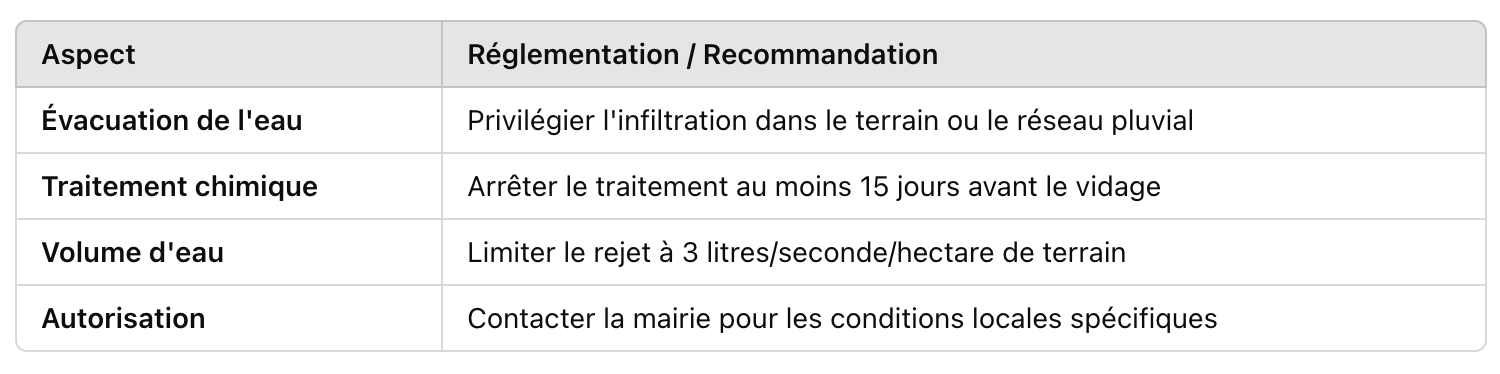
It is forbidden to discharge pool water directly into a watercourse or into the sanitation network without prior authorization. This practice can disrupt the aquatic ecosystem and overload wastewater treatment plants.
Before draining, check with your municipality for local regulations in force. Some municipalities impose additional restrictions, particularly during drought periods.
Essential precautions and final steps
Once your inground pool has been drained, a few precautions are necessary:
Thoroughly clean the walls and bottom of the pool. This is the ideal time to inspect the structure and carry out any necessary repairs. Be careful not to leave the pool empty for too long; your liner could weaken or deteriorate.
For refilling, preferably use water from the public network. If you opt for a well or borehole, have the water analyzed to avoid any sanitary problems. Adjust the pH and disinfectant level before restarting the filtration system.
Remember that complete pool draining remains a delicate operation. If in doubt, do not hesitate to call a professional. Their expertise can save you costly mistakes and guarantee the longevity of your installation.
By following these tips and respecting the regulations, you can keep your pool in excellent condition while preserving the environment. Regular maintenance and well-executed periodic draining will ensure years of serene swimming and unforgettable moments of relaxation in your inground pool.



































