


Salt chlorinators provide pool water treatment without the use of chemicals. This electrochemical process generates chlorine from the salt in the water, ensuring constant and effective disinfection. However, over time, the electrolyzer cell can accumulate calcium deposits and other impurities, reducing its efficiency.
How often should you clean your salt chlorinator cell?
Poolplanet advises you to clean your cell at least twice a year to ensure efficient long-term operation. Ideally, these cleanings should be carried out when restarting your pool, in early spring, and at the end of the season, in autumn. Furthermore, if you want more information on winterizing your pool in autumn, check out our explanatory video on the subject
However, it's also important to monitor the condition of your electrolyzer cell throughout the season. Mid-season, it's recommended to perform an additional cleaning if you observe any of the following signs:
- Your pool water has turned green and/or has algae
- The water in your region is particularly hard. Hard water can promote the accumulation of deposits on the cell.
- Your electrolyzer is working less efficiently than usual. This may be a sign of obstruction or deterioration of your pool cell.
These various elements can be key indicators that your electrolyzer cell needs cleaning to maintain the quality of your pool water.
It's also important to adapt your pool treatment with the arrival of autumn and falling temperatures. To find out more about this, check out our tips:
The Poolplanet guide to cleaning your salt chlorinator cell
Step 1: Prepare to clean your salt chlorinator cell.
Before you begin, make sure to turn off the power supply to the electrolyzer and close the water shut-off valves to avoid any risk of electric shock or water leaks. It is also recommended to wear protective gloves and safety glasses to prevent any skin and eye contact if you are using chemicals during cleaning.
Step 2: Remove the cell from the pipe.
Most electrolyzer cells are designed to be easily removed from the main unit.
Poolplanet's tip: We recommend starting by unscrewing the side of the cell that faces the water outlet. This principle creates an air intake, allowing the water to flow back into the pipe. This way, you can remove the salt chlorinator cell more easily without spilling water everywhere.
Then, empty the cell.
Once the cell is empty and removed, examine it carefully for any deposits of limescale, algae, or other impurities that could obstruct the electrodes. If the cell is heavily fouled, a thorough cleaning will be necessary.
Step 3: Cleaning the electrolyzer cell
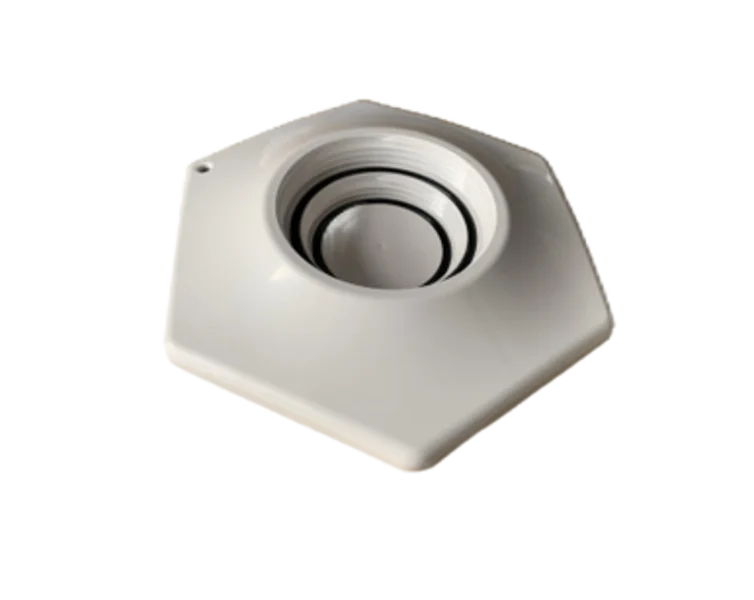
For the cleaning itself, you will need a cleaning cap. To clean your cell, we advise you to use household vinegar to limit the use of chemical products. Hydrochloric acid can also be used if desired.
Here are the steps to follow to clean your pool's electrolyzer cell:
- Screw your cell vertically onto the cleaning cap
- Fill the cell with the cleaning product until the plates are completely submerged.
- Let your vinegar-filled cell sit for 3 to 6 hours, depending on the condition of the cell and the deposits present.
- Repeat the process if necessary to remove all remaining deposits.
- Empty and rinse your cell before putting it back in place.
Step 4: Reinstalling the cell
Once the cell is clean and free of deposits, carefully replace it in the electrolyzer, making sure all electrical connections are properly reconnected. Then restore power and open the water shut-off valves.
By following these simple steps and our Poolplanet tips for cleaning your salt pool electrolyzer cell, you can keep your electrolyzer cell in perfect working order, thus ensuring effective disinfection of your pool. By regularly cleaning your cell and monitoring its condition throughout the season, you can avoid performance problems and maintain effective disinfection of your pool. Remember to take the necessary precautions during cleaning and carefully follow the recommended steps to ensure your safety and the durability of your equipment.



































